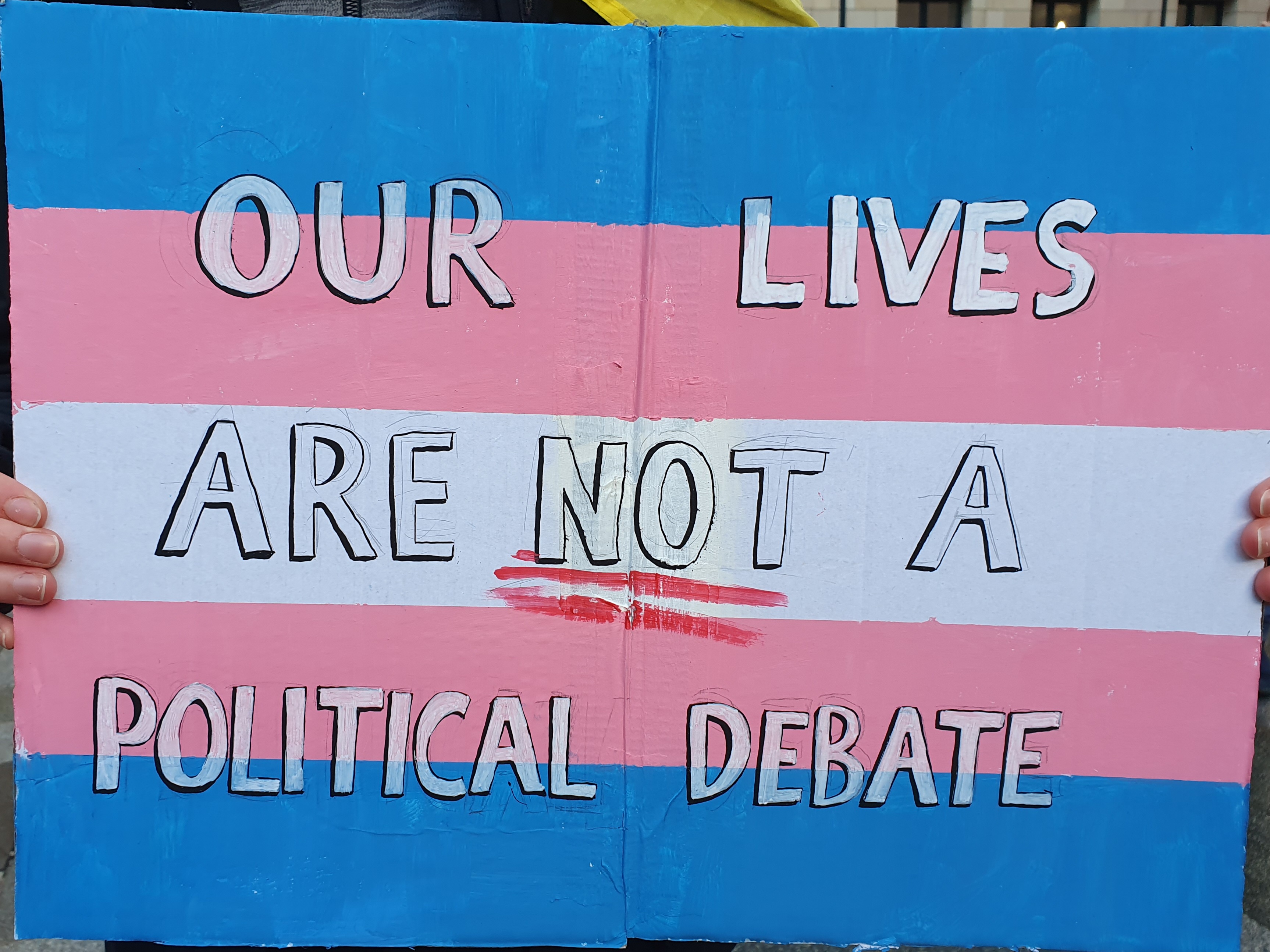

The UK has become much more hostile to trans people in recent years. A particularly troubling instance is that the government is passing a new Equality Act Code of Practice for service providers.
Should this become official, it will recommend businesses open to the public with single-sex spaces (like toilets or changing rooms) or single sex services (like a men’s support group) become more exclusionary towards trans people. These changes have been lobbied for by right wing newspapers and anti-trans organizations funded by/ tied to American conservative movements. We believe this approach is harmful to the safety, dignity, and rights of trans people and others who may not have a conventional gender presentation.
As a service provider, you are now placed in a difficult position. This document is not intended to be formal legal advice, rather a few things we (concerned trans people and allies) ask you to keep in mind as you consider if and how to make changes to your policies.
• The new Code of Practice recommends trans exclusion (trans women may not use the women’s toilets). However, some service providers (including many UK universities) have decided to maintain trans-inclusion (trans women may use the women’s toilets) anyway. Unions like the University and College Union have argued for the same approach.
• Trans exclusion has generally been found to violate trans people’s rights under international law.
• For everyday facilities like toilets and changing rooms, unisex / gender neutral options are possible – provided there are private, lockable ‘rooms’. If you can offer this set up, that may be your best option for both following the code and remaining trans inclusive.
• The code is clear that for services everyone must use (like toilets and changing rooms), trans people should not be left with no option.
• The code does allow that someone might be asked (politely and privately) about their birth sex. But says this should be rare. We would strongly suggest this should never be done. It will increase the hostile environment towards trans people. You cannot know someone’s birth sex for sure, so will invariably get it wrong. Your staff may not want to do this, or feel it is discriminatory. And making them do this may create other legal liabilities.
• Be aware that there is a lot of misinformation being pushed by anti-trans groups. Be careful who you take information from.
• If you feel you are able to offer a service that remains trans inclusive, or the facilities in your setting remain trans inclusive, please advertise that fact. For instance, displaying a trans flag, or ‘trans people are welcome here’ sign. The world is feeling very oppressive right now and solidarity helps.
This is a legal issue for service providers, but also a moral one. We suggest that you discuss this carefully internally and, where possible, take specialist legal advice.
We also ask that you keep in mind that there are real people at the heart of this. Trans people were already vulnerable and a great deal of hate has been directed towards them in recent years. Please do not make their lives harder if you can help it.
Here is a link to a formatted PDF version of the above